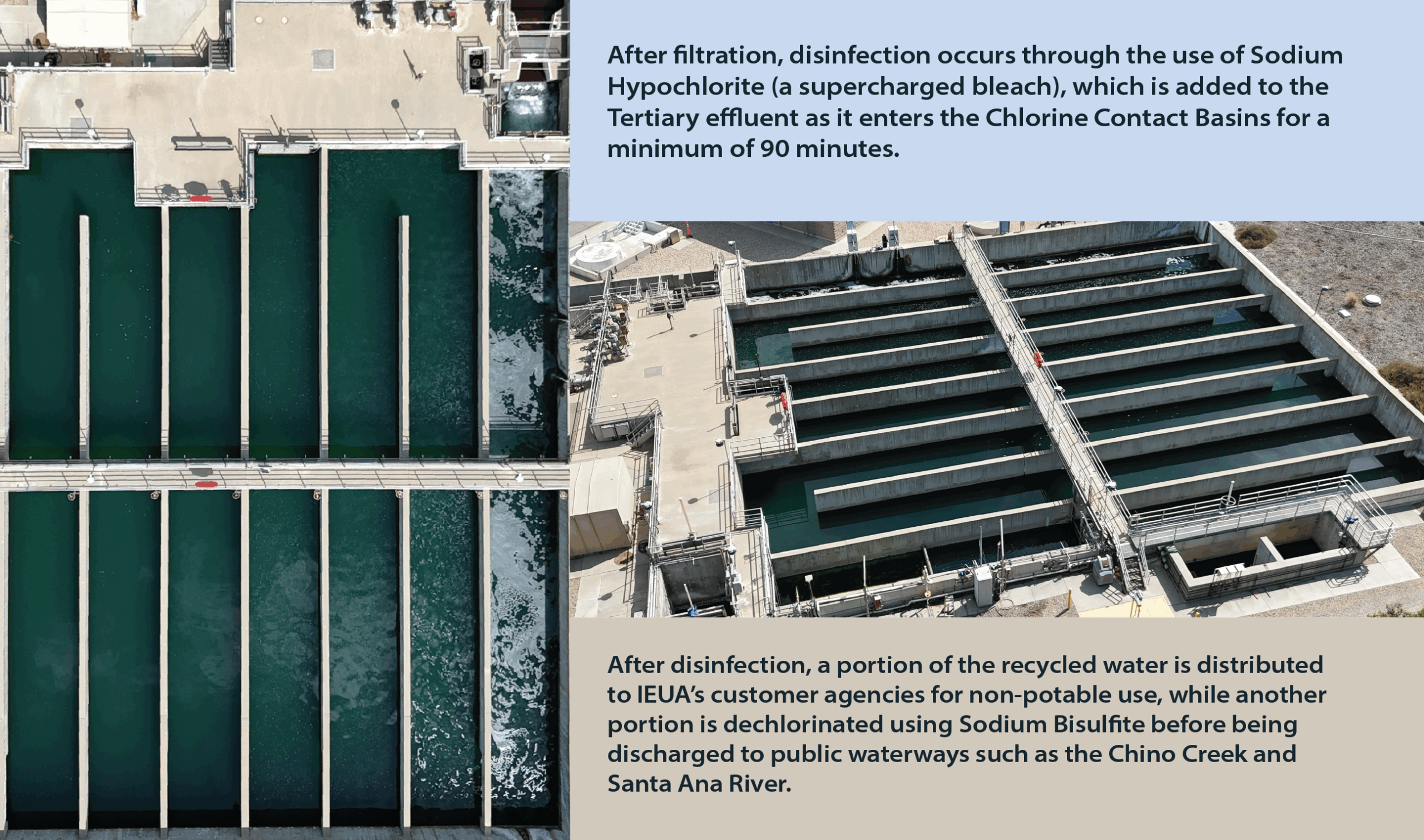

The tertiary treatment system includes filtration and disinfection. Filtration removes the minor amount of suspended solids that escape settling in secondary clarification. Water is separated from these suspended impurities by passing the water through porous filter media. The water may also receive preparatory treatment prior to its application to the filters, including chemical addition, rapid mix, and flocculation. Disinfection of the filtered effluent is accomplished by injecting a chlorine solution in the form of sodium hypochlorite (bleach) to filtered effluent. The disinfection system continuously injects bleach for elimination of remaining microbial pathogens in the filtered effluent. Pathogenic microbes are exposed to chlorine at an elevated concentration for a significant time period. The chlorine solution disrupts microbial cell membranes, destroying the microorganism by chemical oxidation of molecular bonds in enzymes and proteins used for cell metabolism. When enzymes do not function properly, a cell or bacterium will die. This process is rapid but not instantaneous. Therefore in order to ensure that all microorganisms are exposed or contacted with chlorine, the chlorination reaction occurs in a long residence time contact basin.