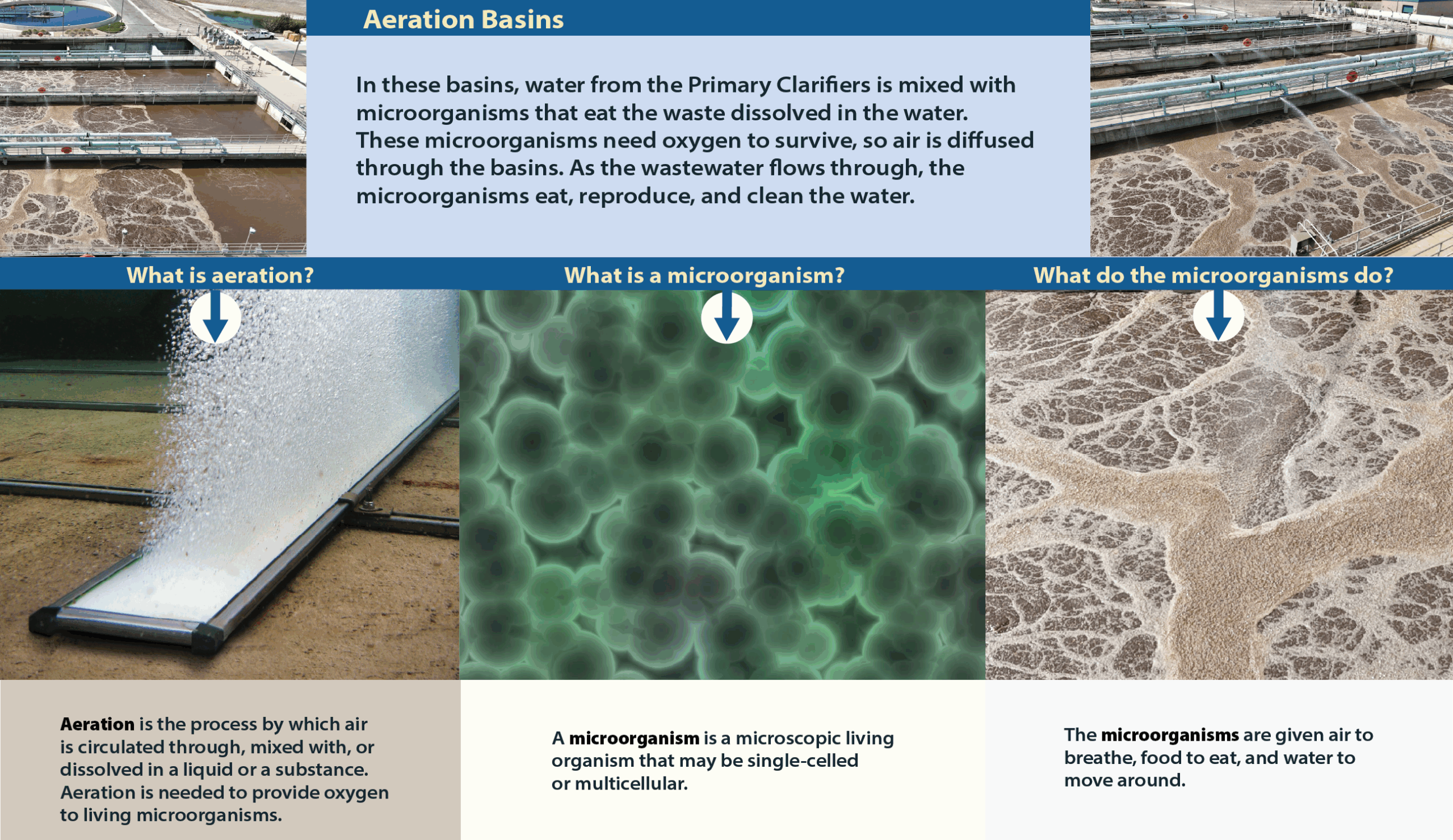

The secondary treatment system is a biological nutrient removal system that includes aeration basins and secondary clarification. The purpose of the aeration basin is to perform the following functions: (1) create biological conditions to further consume carbonaceous waste from the influent stream, (2) convert influent ammonia to nitrate through nitrification and, (3) convert the nitrate to nitrogen gas through denitrification, (4) release nitrogen gas into the atmosphere, and (5) reduce pathogenic organism counts in the influent stream.
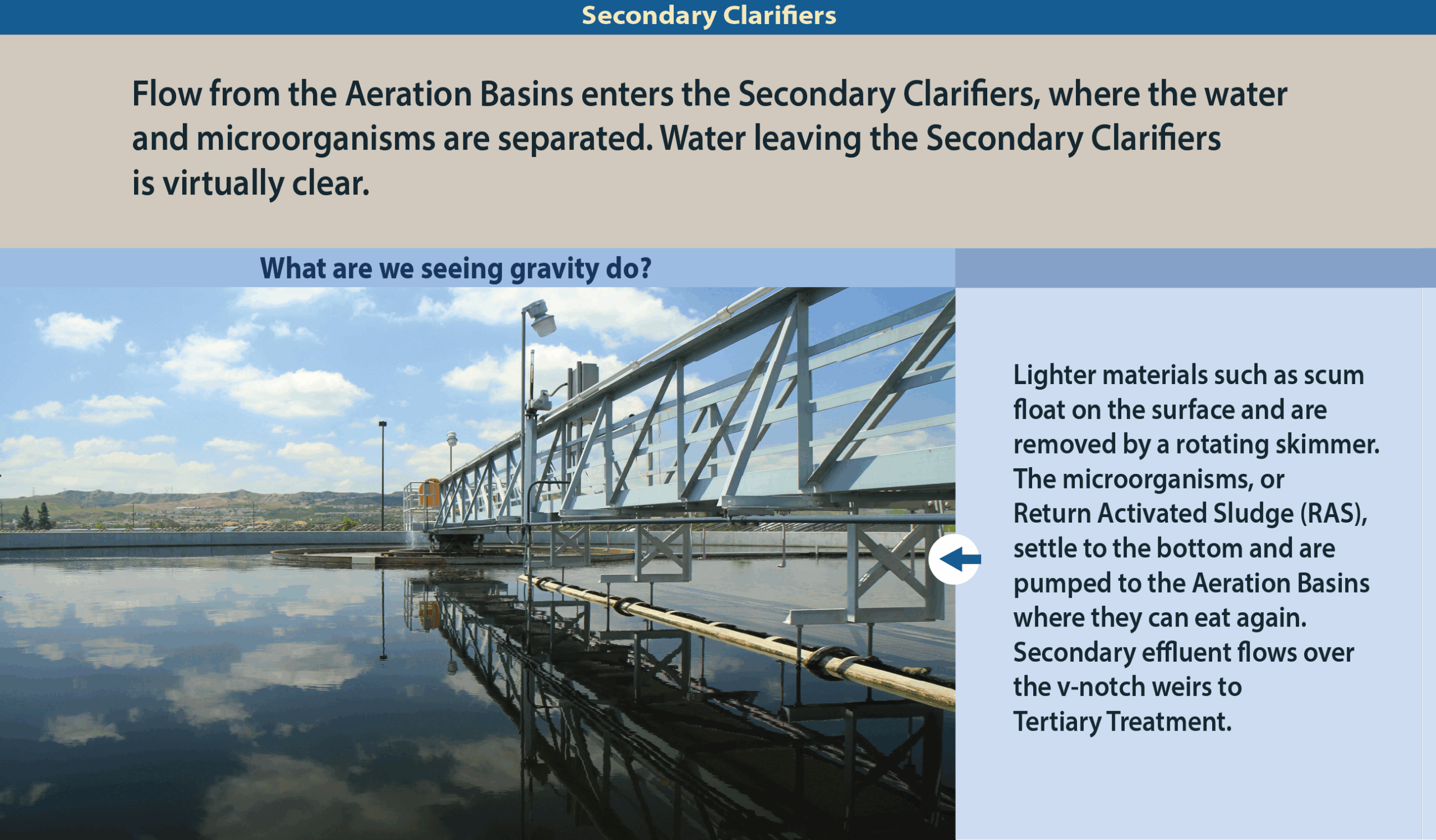
The system performs this task by biologically converting the dissolved and finely divided organic solids into settleable solids called Mixed Liquor Suspended Solids (MLSS) within the aeration basin. The resulting biological solids flow to secondary clarification, where it is allowed to flocculate into large solids, settle, and subsequently return to the Aeration Basins. This is referred to as Return Activated Sludge (RAS). The MLSS includes microorganisms that continually multiply and, therefore, must be removed from the secondary treatment system to maintain a balanced ratio with the influent organic matter for proper treatment. This is accomplished by means of wasting RAS or MLSS from the treatment system. In addition, any grease and other light microorganisms that float to the surface of the clarifier are removed as scum.